Article
From T to Tetris-Shaped Engineer
I heard something on a podcast recently that stopped me mid-commute.
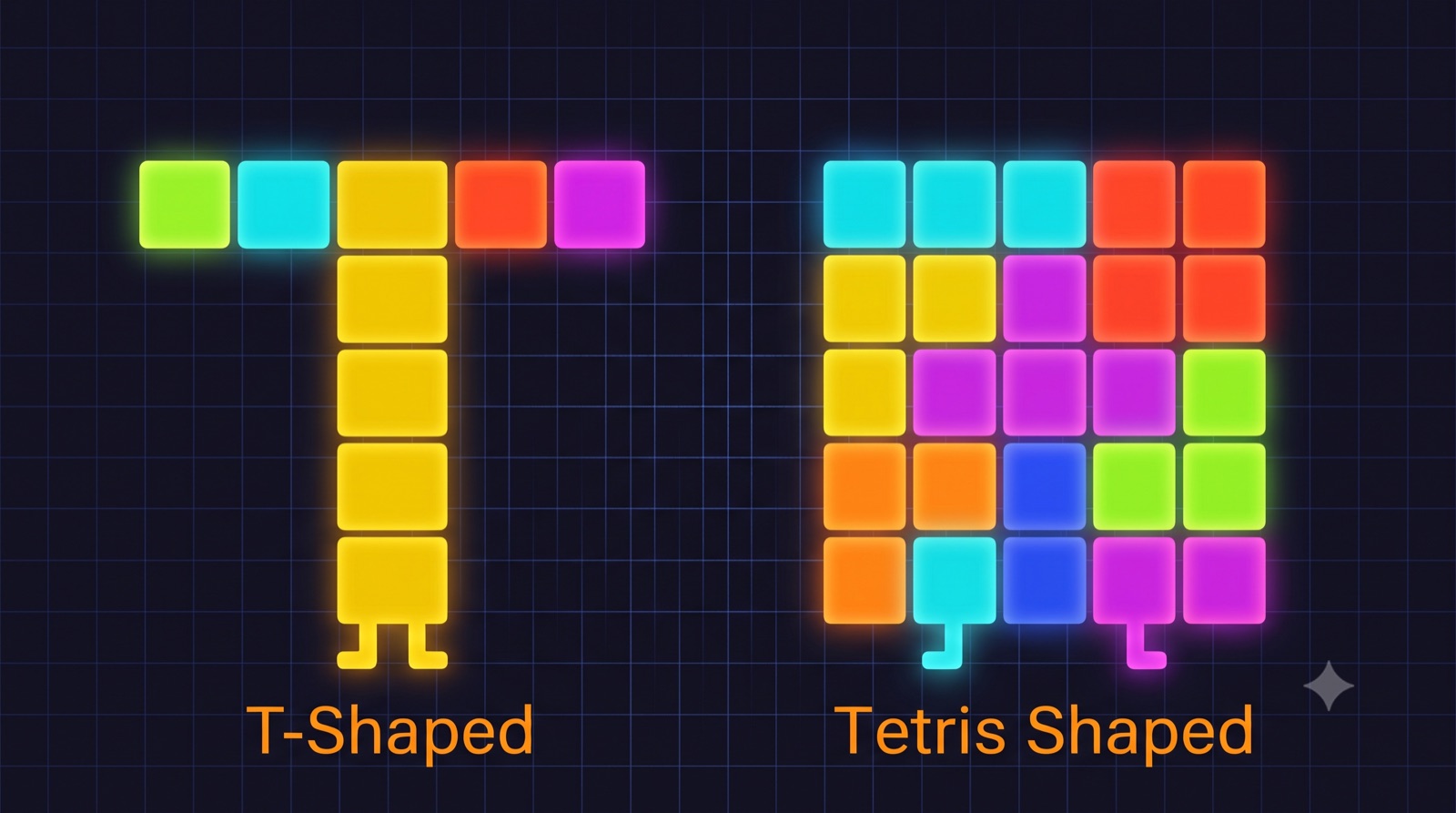
"Companies don't want T-shaped engineers anymore. They want block-shaped ones."
T-shaped meant depth in one area and working familiarity across the rest. Block-shaped means genuine proficiency across every area the company cares about. Not just one specialty with shallow awareness of other topics but full competence, broadly.
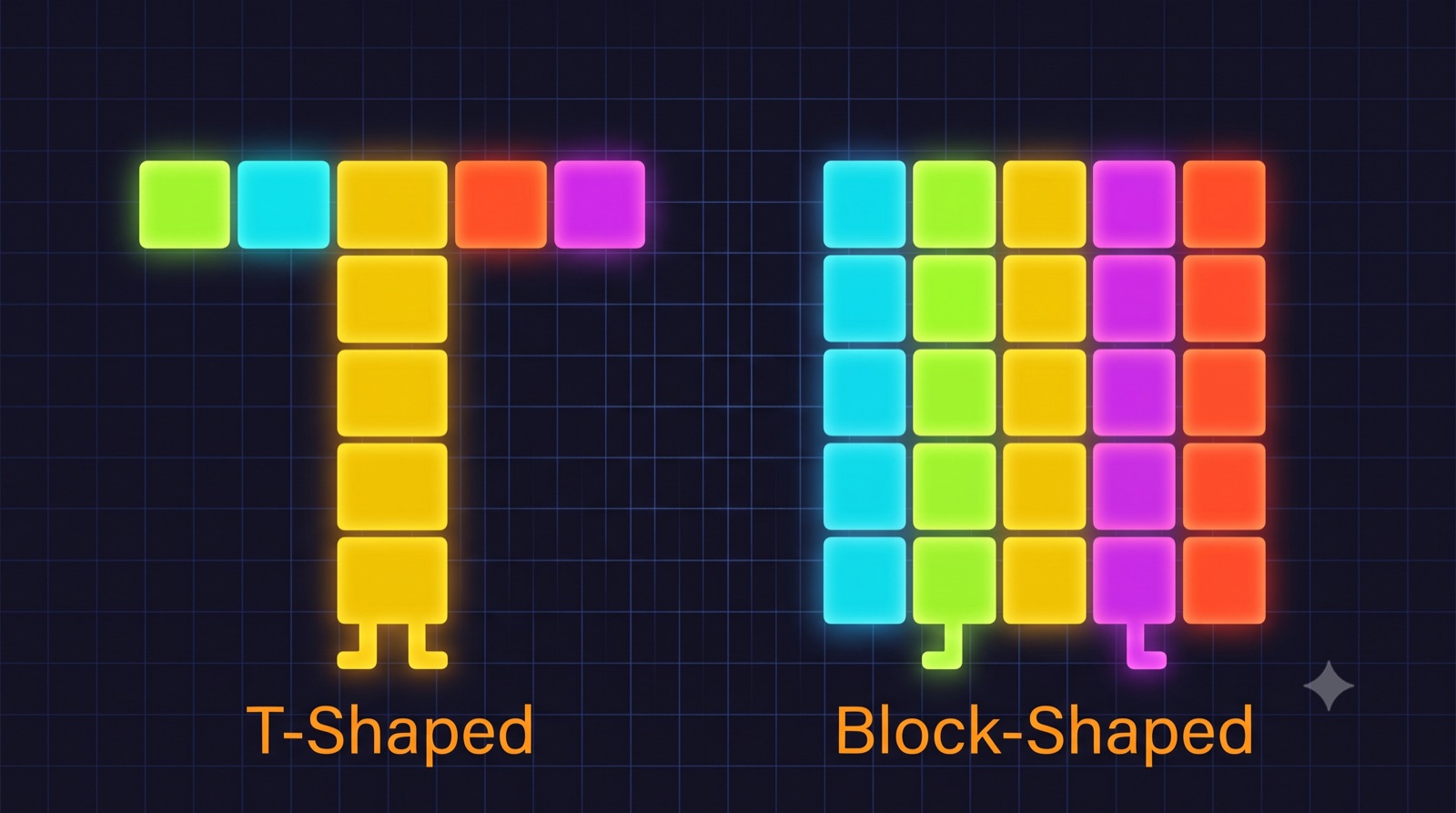
My first reaction was something close to panic. How do you upskill in everything simultaneously? How do you even know which skills make up your block? And where on earth do you start?
So I did what any builder does when confronted with an impossible problem. I started building.
The Pattern I Didn't Expect to Find
I began finding every place I could apply AI to my work: course creation, content pipelines, code, research. Not with a plan, exactly. More like a builder's instinct: try things, see what sticks and keep what works.
And slowly, a pattern emerged.
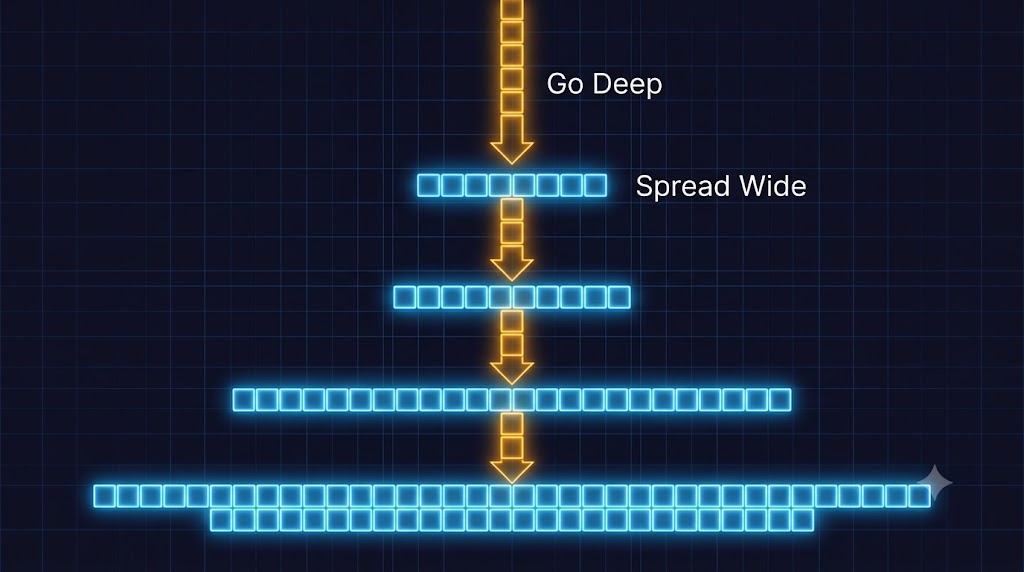
AI makes it remarkably easy to alternate between going wide and going deep on a topic. Something that used to be nearly impossible to do alone.
Going wide barely costs anything now. I hand a topic to deep research and it comes back with a full report in about thirty minutes: the state of a field, the primary sources, what actually shipped recently. That used to take weeks, and most of those weeks went to working out what was even worth reading.
Let me show you what I mean with a real example.
PowerPoint Slides and the Loop I Kept Falling Into
I was building a PowerPoint skill for my courses. I started wide: doing research on the best AI slide generators that an AI Agent could orchestrate. Once I found the best, I dove deep into the documentation, configuration and limitations of that software, created a demo and realized that, while effective, the renderer I chose for the software wasn't visually appealing. So, back to wide, exploring each renderer, trying them out and finding the right fit.
Once I had a nice pipeline for the slides, I looked wide again at the best voice AI pipelines, tried the top few and chose the best. Then back to deep exploration: understanding all the new knobs of that topic.
Explore → Master → Repeat.
I kept expecting the loop to resolve into a straight line. It never did. And eventually I stopped waiting for it to.
The Tetris Realization
As I saw this pattern repeat across more and more projects, I came back to my original question: how does this emerging process of alternating between wide exploration and deep mastery actually build a block-shaped engineer? Especially when the landscape keeps changing?
Then I started thinking about the pieces themselves.
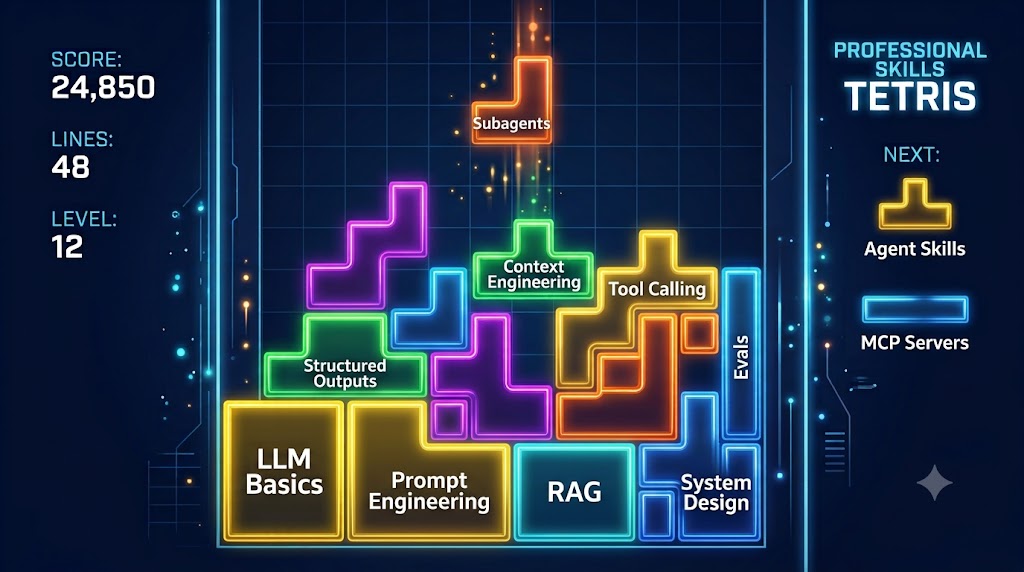
Each time I completed a loop (expanding wide then diving deep and back), I had a new piece of working knowledge. And each new piece had to fit with what I already knew. Sometimes it slotted in cleanly. Sometimes I had to rotate it a few times. Occasionally I had to rethink where other pieces sat to make room.
That's Tetris.
A new skill emerges, a new piece drops, and you do your best to fit it into your existing understanding. Your block isn't planned, rather it forms. And when enough pieces clear a row, it makes room for more. For the next wave.
What I Actually Concluded
Here's what I know after doing this for a while:
You can't pre-plan your block. You don't know how wide you'll need to go on the next topic, or how deep, until you're in it. The shape of your knowledge isn't something you design ahead of time. It emerges from the work.
That's also why AI hasn't flattened the field the way people expected. It doesn't hand you the pieces already placed. It just drops them faster.
But that's okay. Because the goal isn't to become T-shaped or block-shaped.
The goal is to keep playing.
Every loop you complete is a piece dropping. And if you keep playing, the block builds itself.
I stopped trying to architect my skill shape.
I just play Tetris.